Chimney Liner Installation for San Rafael Homes
The liner is the part of a chimney that actually contains the fire's heat and exhaust. In most older San Rafael homes it is a stack of clay tiles set inside the brick, and in some of the earliest houses in Gerstle Park and around Dominican there may be no true liner at all. Clay tiles do their job well until something cracks them, and in Marin several things can: a chimney fire, decades of heating and cooling, water from winter storms, and earthquakes that knock the tiles against each other.
Chimney liner installation gives the chimney a new, continuous flue inside the old one. Chimney Services Pro sizes and installs liners so the flue is sealed, matched to the appliance it serves and ready for many seasons of safe use.
Signs Your Chimney Needs Relining
Most relining needs are found during a camera inspection rather than spotted by homeowners, but there are warning signs worth acting on:
- A Level 2 inspection shows cracked, offset or missing flue tiles or open mortar joints
- Pieces of tile or flaky, burnt-looking debris falling into the firebox
- Poor draft or smoke spillage that cleaning does not cure
- Staining, a strong odor or moisture on interior walls near the chimney
- You are switching to a gas appliance or adding an EPA-certified wood heater
- The chimney has been through a chimney fire or a strong earthquake
If you are not sure about the flue's condition, start with a camera chimney inspection. We will show you the video and explain whether relining is actually needed. Keep in mind that a cracked flue is a carbon monoxide concern as well as a fire concern, since exhaust can seep through gaps into the attic or living spaces.
Liner Options We Install
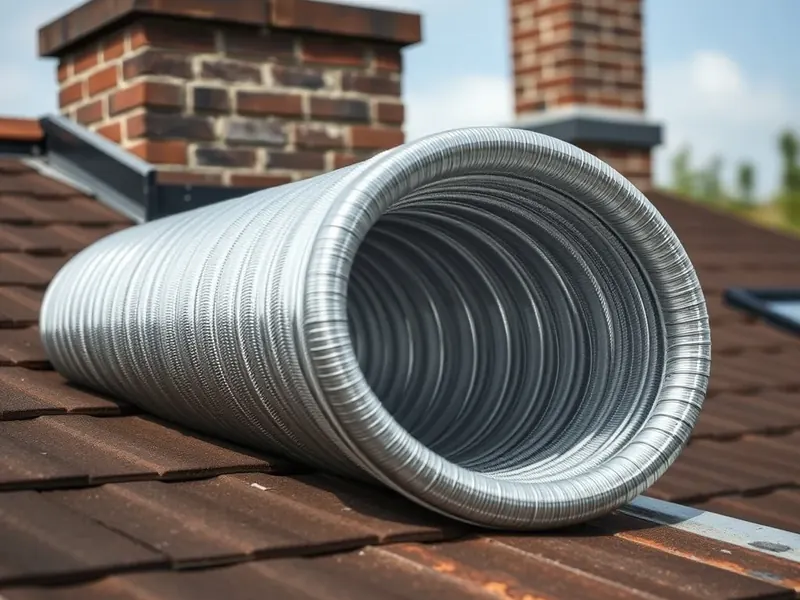
Stainless steel liners. Our most common solution is a stainless steel liner listed to UL 1777, the safety standard for chimney liners. Rigid or flexible, it runs the full height of the flue and connects to a top plate and cap. For wood-burning appliances and many existing chimneys, the liner is insulated to maintain safe clearance to nearby framing and keep flue gases hot for a stronger draft.
Cast-in-place and resurfacing systems. For oversized, irregular or offset flues in older chimneys, a heat-resistant material can be applied inside the existing flue to seal cracks and restore a smooth, continuous surface. It is a good fit when you want to keep using an open masonry fireplace.
Correct sizing. A liner that is too large lets exhaust cool and condense, and one that is too small chokes the fire. We size liners from the manufacturer's instructions for gas and wood appliances, or from the fireplace opening for open hearths, rather than using whatever fits down the chimney.
Complete systems. Every liner is installed with its matching listed components, from the tee or connector at the bottom to the top plate and cap, because a liner system is only as reliable as its weakest joint.
Relining After an Earthquake or Chimney Fire
Both events tend to leave the brick looking fine from outside while the tiles inside are cracked. Relining can return the chimney to safe service without a full rebuild, as long as the masonry itself is structurally sound. If the upper chimney is loose, leaning or cracked through, a liner alone will not protect you from falling brick in the next quake, so the structure should be dealt with first through seismic chimney repair. Many seismic rebuilds include a new listed flue as part of the work, so you are not paying for the same component twice.
After a chimney fire, we also check the smoke chamber, damper and nearby framing for heat damage, since the liner is rarely the only thing affected.
What to Expect on Installation Day
Most liner installations are finished in a single day. We protect the room around the fireplace, clean the existing flue, and set up safe roof access, which on the steep lots of Glenwood and San Rafael Hill can take extra time for ladder placement and roof protection. The liner is fed down the flue, connected at the bottom, sealed at the top with a plate, and finished with a stainless cap and spark screen suited to Marin's fire-safety expectations. We close out with a draft test and a camera pass so you can see the new flue for yourself.
If the liner is part of a switch to a cleaner-burning appliance, see our fireplace inserts page. The cap that tops every new liner is covered on our chimney cap and spark arrestor page.