Spark Arrestors and Chimney Caps for San Rafael's Wildfire Risk
San Rafael is ringed by open space. The ridges above Terra Linda, the San Pedro peninsula around China Camp State Park and the wooded canyon of Glenwood put thousands of homes right next to grass, brush and oak woodland, and the San Rafael Fire Department sends annual defensible-space notices to more than 9,000 residential properties in its wildland-urban interface. The city has also extended many wildfire building requirements to every parcel within its limits, reflecting how large California fires tend to spread through wind-blown embers rather than a single flame front. After Cal Fire updated its hazard maps, seasonal city inspectors completed more than 3,700 inspections in 2025, with much of the fieldwork in Terra Linda.
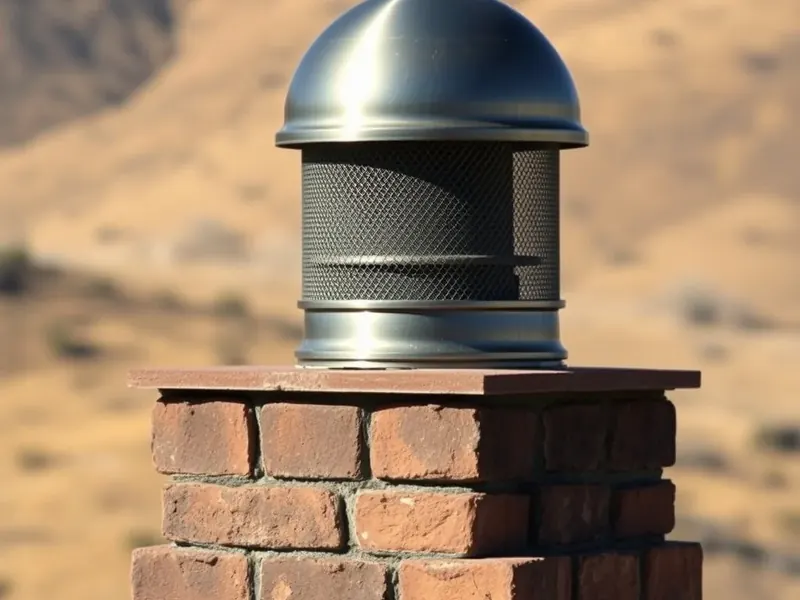
A chimney without a proper spark arrestor can work the other way, sending embers out onto a dry roof or hillside. Chimney cap and spark arrestor installation is one of the simplest fire-safety upgrades a San Rafael homeowner can make, and Chimney Services Pro gives it the same care as larger projects.
What Local Fire Standards Expect at the Chimney Top
Marin County Fire's residential standards call for a spark-arresting screen made of noncombustible material, with openings no larger than 1/2 inch, over the outlet of every chimney serving a fireplace, stove or other solid-fuel appliance. The residential code adds practical details: the mesh should not be so fine that it blocks openings smaller than 3/8 inch, the screen must resist heat and corrosion, its open area has to be large enough not to restrict the draft, and it must be accessible for cleaning.
California's defensible-space law, Public Resources Code 4291, also calls for removing any portion of a tree that extends within 10 feet of the outlet of a chimney or stovepipe on the properties it covers. We flag overhanging limbs during every visit so you can have a licensed arborist deal with them well before fire season.
More Than Ember Control: Rain, Wildlife and Wind
A well-built cap earns its place even on nights the fireplace stays cold. It keeps the heaviest winter rain out of the flue, which protects the damper, smoke chamber and firebox from rust and saturation during atmospheric-river storms. Its mesh keeps birds, squirrels and raccoons from moving into a chimney that sits unused most of the year, a common problem in San Rafael's mild climate. On breezy sites near the bay, such as Peacock Gap and Loch Lomond, a hood designed for wind can also reduce the downdrafts that push smoke back into the room.
If water is already getting in, pair a new cap with our chimney leak repair and waterproofing service so the crown and flashing are sound as well.
Choosing the Right Chimney Cap for Your Home
- Single-flue caps clamp or bolt to the top of one flue tile or liner and are the simplest option.
- Multi-flue and full-width caps cover the whole crown, which suits the multi-flue chimneys found on many older homes in Gerstle Park and Dominican, and they shelter the crown from rain at the same time.
- Top-sealing damper caps combine a cap with a damper that closes at the top of the chimney, useful where the original throat damper is rusted or missing.
- Materials: we favor stainless steel or copper for corrosion resistance, since light galvanized caps tend to rust out quickly in damp, salty bay air.
Screens on wood-burning chimneys collect soot and creosote over time, and a clogged screen can choke the draft. That is why we inspect and clean the cap during every chimney sweep.
Installation Across San Rafael and the Surrounding Hills
Once we are on the roof, installation usually takes under an hour. We measure the flue or crown, confirm the cap's open area will not restrict the draft, fasten it with stainless hardware and photograph the finished work for your records. Steep and tile roofs are common in the hills, so we plan access carefully rather than rushing it.
We install spark arrestors throughout central and southern Marin, including wooded neighborhoods at the wildland edge in Fairfax and Mill Valley. For urgent situations, such as a cap blown off in a winter storm, we offer priority or same-day scheduling when available.
Between visits, take a look at your chimney from the street once or twice a year. A cap that is tilted, missing or visibly blackened with soot is worth a call before the next fire.