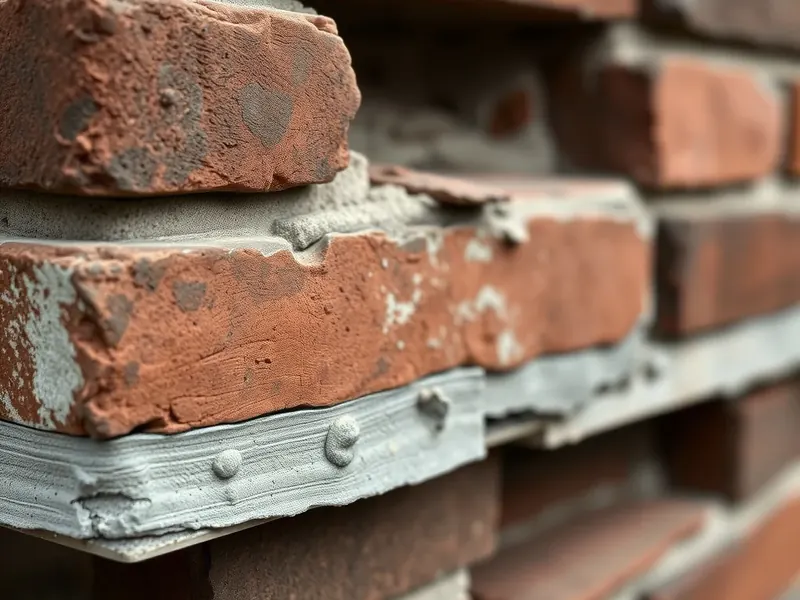
Unreinforced brick, aging tile and factory-built fireplaces in older Marin homes
An older Marin house usually has one of two kinds of fireplace. Houses from the early and middle decades of the twentieth century tend to have a masonry fireplace with a brick chimney and a clay tile flue; later, factory-built fireplaces with metal pipe inside a framed chase became increasingly common in new houses and remodels. The two age in very different ways.
With brick, the main concern is earthquakes. After the 2014 South Napa earthquake, FEMA's assessment teams found over 100 brick chimneys damaged by the shaking, and the agency's recovery advisory on earthquake-damaged chimneys names older, unreinforced chimneys with degraded mortar as the most vulnerable. It calls bringing such a chimney up to modern seismic performance generally infeasible, and treats partial or full removal of the masonry, rebuilt with a metal flue or fireplace insert inside light framing, as best practice. Hence the close look a Marin inspection gives to open joints above the roofline, loose top courses and gaps between stack and wall, and why seismic chimney repair can mean rebuilding the upper chimney rather than patching it.
Clay tile liners crack from shaking, chimney fires and age, and a cracked liner can let heat reach the framing around the flue; a stainless steel chimney liner is the usual fix for a masonry flue that will keep serving a fire or an insert. Factory-built units fail elsewhere: crumbling firebox panels, rusted chase covers and caps, and damaged pipe sections, all needing parts listed for that particular model.
An older-home checklist for central and southern Marin
- Leave the fireplace cold after any earthquake you felt until the chimney has been looked at; CSIA's inspection procedure lists a seismic event among the reasons for a Level 2 inspection.
- Study the chimney where it leaves the roof. Open mortar joints, a top that leans, or a gap between the chimney and the siding are worth reporting before the rainy season.
- Check the spark arrestor screen. In the wooded canyons of the Ross Valley and Mill Valley, a rusted or missing screen is an ember risk; see the chimney cap and spark arrestor page.
- Know the burn rule. A Bay Area Air District Spare the Air alert for fine-particle pollution bans burning wood on any day it is called, whatever the season, and most alerts have come between November and February. On October 1, 2025 the district's board adopted amendments to its wood-burning rule, Rule 6-3, lowering the forecast pollution level that triggers a ban.
- Treat the damper with care. Following CPSC advice, open it before a fire and shut it only after the ashes have gone completely cool.
- Keep the paperwork for a factory-built fireplace. The model and listing label decide which parts, doors and fireplace inserts may be installed.
Citing and reusing the Marin table
The American Community Survey pools five years of responses so that small towns such as Ross and Fairfax get usable figures. The price is a margin of error on every estimate, large in the smallest places, so when two Marin towns sit close together in the table, read their order as approximate. The margins are published with each table on data.census.gov.
Census data belongs to the public domain. The compiled table, meaning its selection of towns, its order and its layout, is published by Chimney Services Pro under the Creative Commons Attribution 4.0 license. A town newsletter, homeowners association, reporter or real estate agent is welcome to reuse it in full or in part, with credit and a link to this page, and the CSV download under the table carries the same rows. A short credit is enough, for example "Data: U.S. Census Bureau American Community Survey, compiled by Chimney Services Pro."
Whenever the main column is quoted, its definition should travel with it: owner-occupied single-family homes built before 1980, detached or attached. It undercounts the older chimneys in a town with many older condominiums and apartment buildings, and it cannot show which houses have since had a chimney removed, rebuilt or capped.