Why Dryer Vent Cleaning Matters in San Rafael
Lint is highly flammable, and the U.S. Fire Administration identifies failure to clean as a leading factor in home clothes dryer fires. In San Rafael, the dryer also works hardest exactly when lint builds up fastest: through the long wet season, roughly November through April, when line-drying outside is not an option and every load goes through the machine. A restricted vent makes each load take longer, overheats the dryer and pushes warm, damp air and lint into places it does not belong.
Dryer vent cleaning in San Rafael, CA is a natural companion to chimney care, and Chimney Services Pro brings the same careful, tidy approach to both. The U.S. Fire Administration's home fire prevention resources are worth a look for any household.
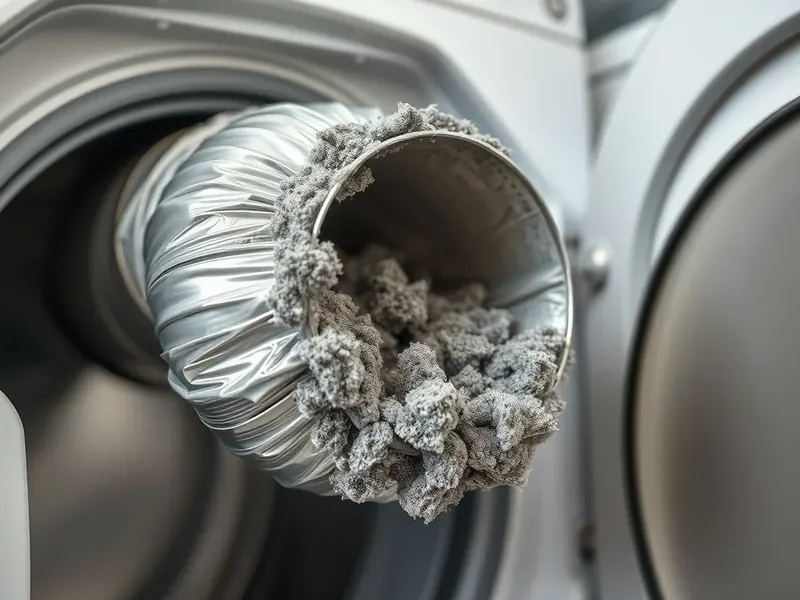
Signs Your Dryer Vent Needs Cleaning
A clogged vent usually shows itself in the laundry room before it becomes dangerous. Call for a cleaning if you notice:
- Towels or jeans that need a second cycle to dry
- The top or sides of the dryer feel unusually hot during a cycle
- A burning or scorched smell while the dryer runs
- Lint collecting around the door seal, behind the machine or at the outside hood
- The exterior hood flap stays closed or barely moves while the dryer is on
- A humid, stuffy laundry room, or condensation near the vent
- More than a year since the full vent was cleaned
Our Dryer Vent Cleaning Process
We pull the dryer out carefully, protect the floor and disconnect the transition hose. The entire duct is then cleaned from the inside, using rotary brushes and air tools sized to the duct, with a vacuum capturing the lint as it comes loose. At the outside hood we remove lint mats, leaves and the nests that birds often build in hoods during spring, which is common on homes surrounded by trees in neighborhoods like Sun Valley and Glenwood. We also clean the lint trap housing inside the dryer, where lint collects below the screen.
Airflow is measured before and after so you can see the difference. Before we leave, the dryer is reconnected with a rigid or semi-rigid metal transition, never foil or vinyl, and pushed back without kinking the duct.
Fixing Long, Crushed and Rooftop Vent Runs
The California Mechanical Code limits a domestic dryer exhaust duct to a combined 14 feet, including two 90-degree elbows, with 2 feet deducted for each additional elbow, unless the dryer manufacturer's instructions allow a longer run. Many San Rafael homes exceed that. Laundry moved to an interior closet during a remodel, dryers in garages venting across the ceiling, and condos and townhomes with ducts snaking between floors all add length and bends.
Vents that exit through the roof are another common trouble spot, since lint collects at the top where no one sees it and roof hoods are easily blocked. Where we can, we reroute to a shorter path, replace crushed ducts behind the machine and repair hoods with stuck or missing flaps, explaining each fix before we make it. We also look for screws that protrude into the duct and catch lint, and for sections joined in the wrong direction.
How Often to Clean and Keep the Vent Clear
Once a year suits most households, and busy families or long duct runs may need more frequent service. Between cleanings:
- Empty the lint screen before every load, and wash it now and then to remove fabric softener film.
- Avoid running the dryer when no one is home or overnight.
- Keep plants and stored items clear of the exterior hood, which also supports the defensible-space work the fire department asks of hillside homes.
- Check that the hood flap opens freely while the dryer runs.
Many customers book dryer vent service on the same visit as a chimney sweep, and we serve homes around the bay as well, including Tiburon and Larkspur.
Gas Dryers, Carbon Monoxide and Safe Terminations
Gas dryers add another reason to keep the vent clear. Their exhaust carries combustion byproducts, including carbon monoxide, and a blocked vent can let those gases back into the house. Every home with a gas dryer or other fuel-burning appliance should have working carbon monoxide alarms, and we confirm that the vent ends outdoors, never in an attic, crawl space or garage. Electric dryers produce no combustion gases, but a clogged duct still overheats the heating element and shortens the life of the machine.